Color Psychology in Kids’ Furniture: Choosing the Right Shades

Discover how color psychology influences kids’ furniture choices. Learn the best colors for classrooms, play areas, and learning spaces to support child development.
Colors play a powerful role in a child’s emotional, cognitive, and behavioral development. When it comes to kids’ furniture, color is more than a design choice—it directly influences mood, focus, creativity, and comfort.
In schools, preschools, and learning centers, selecting the right color palette for children’s furniture can significantly enhance learning experiences. Let’s explore how color psychology impacts kids’ furniture choices and how educators and parents can choose the right shades.
Why Color Psychology Matters in Kids’ Furniture
Children are highly responsive to colors, and their developing brains react strongly to visual stimuli. The colors used in classroom furniture, study tables, chairs, and storage units can either stimulate learning or cause distraction. Thoughtfully chosen colors help create a balanced environment that supports concentration, emotional stability, and creativity. This is why color psychology has become a key consideration in modern kids’ furniture design.
Best Colors for Learning & Focus
Certain colors are known to enhance concentration and calmness, making them ideal for study areas and classrooms.
- Blue promotes calm, focus, and productivity, making it suitable for desks and study chairs.
- Green reduces stress and eye strain, creating a balanced and refreshing learning environment.
- Neutral shades like beige and light grey help maintain focus without overwhelming young minds.
Choosing the Right Colors for Different Age Groups
Age plays an important role in color selection for children’s furniture.
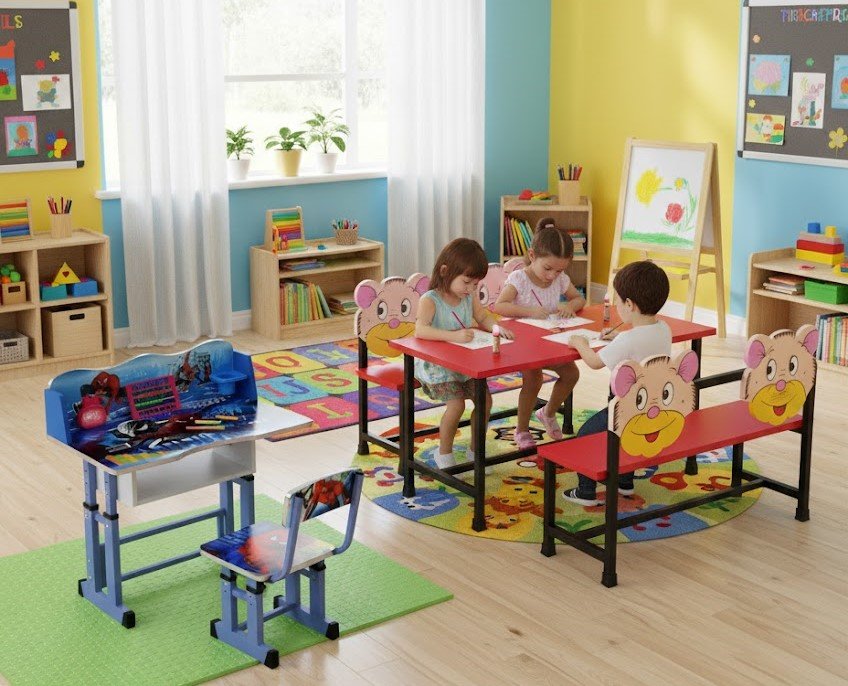
- Toddlers & Preschoolers respond well to bright, playful colors that support sensory development and engagement.
- Primary School Children benefit from a balanced mix of calming and stimulating colors to support learning and creativity.
- Older Kids & Teens prefer more mature tones such as blues, greens, and muted shades that help improve focus and reduce distraction.
Matching furniture colors to age groups creates environments that feel comfortable and age-appropriate.
Safety, Balance & Practical Considerations
While color choice is important, it must be balanced with safety and durability. Kids’ furniture should use non-toxic, low-VOC paints and finishes to ensure child safety. Lighter colors can make spaces feel open but may require easy-to-clean surfaces, while darker shades hide stains better in high-use areas. Combining color psychology with practical needs ensures long-lasting and safe furniture solutions.
Choosing the right colors for kids’ furniture is a strategic decision that supports emotional well-being, learning, and creativity. By understanding color psychology and applying it thoughtfully across classrooms, play areas, and study spaces, schools and parents can create environments where children feel motivated, calm, and inspired. In modern educational and home settings, the right shades truly make a difference.
Share This Article